What’s in a picture? Daniel Cummings’ Store and His Christmas Spirit
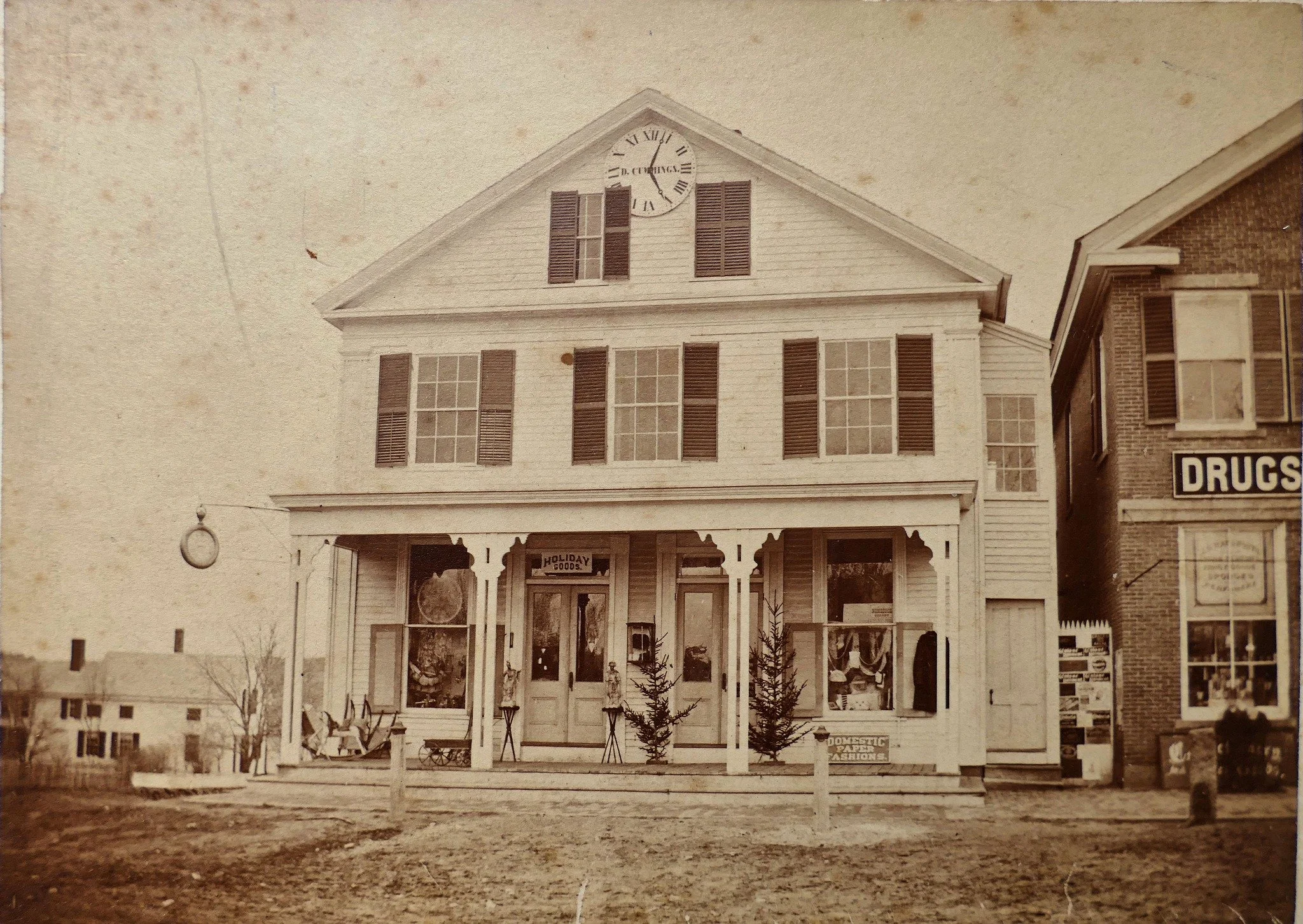
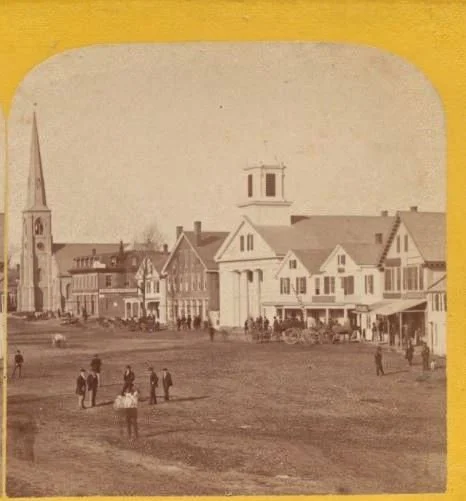
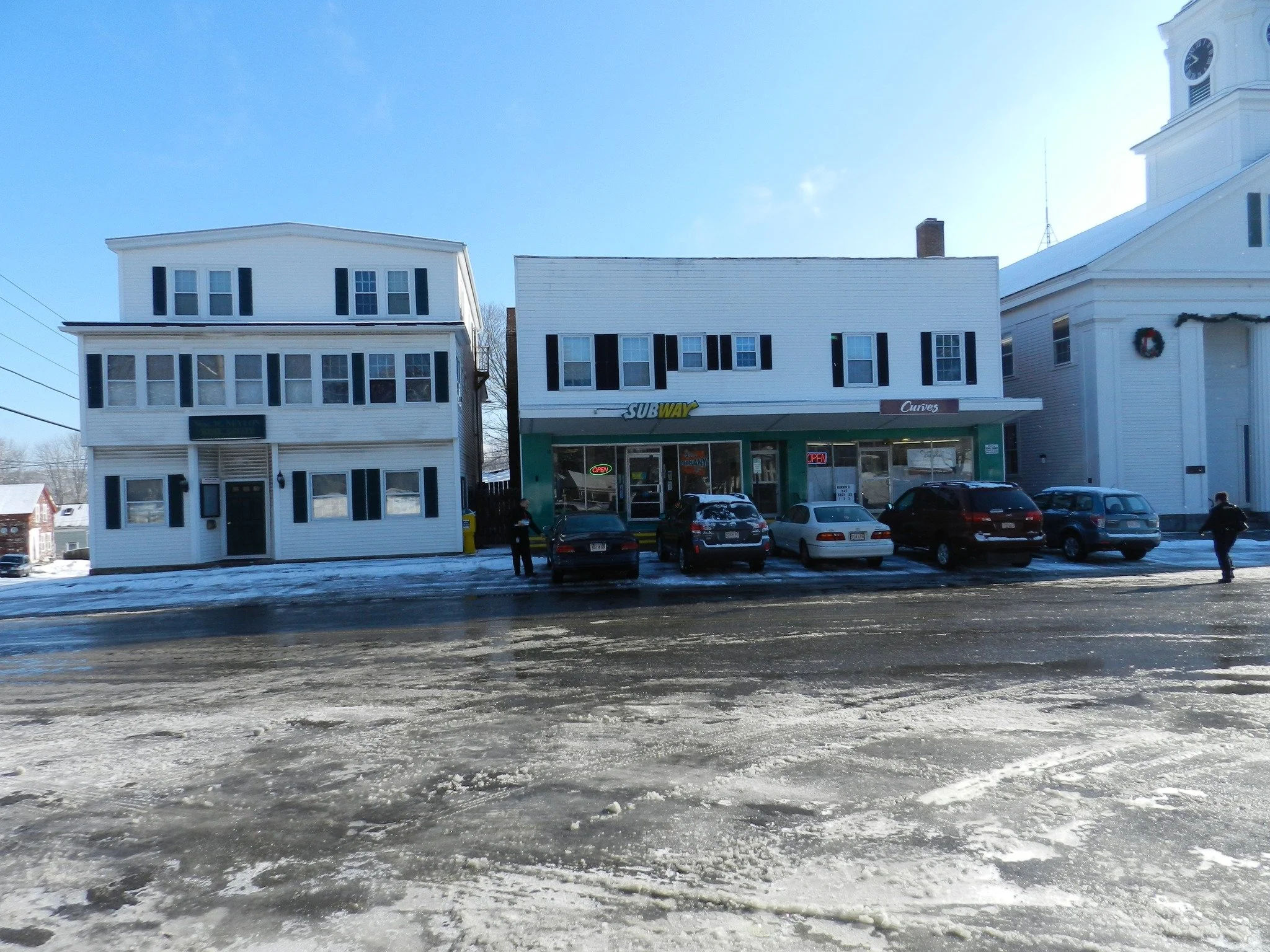
The building that served as Daniel Cummings’ jewelry and clock store on Exchange Street on Barre Common from the 1840s until his death in 1875 still stands, although it looks quite different than it did when it was built.
For many years in the 20th century, this building was known for two primary functions: drugstore and dentist’s office.
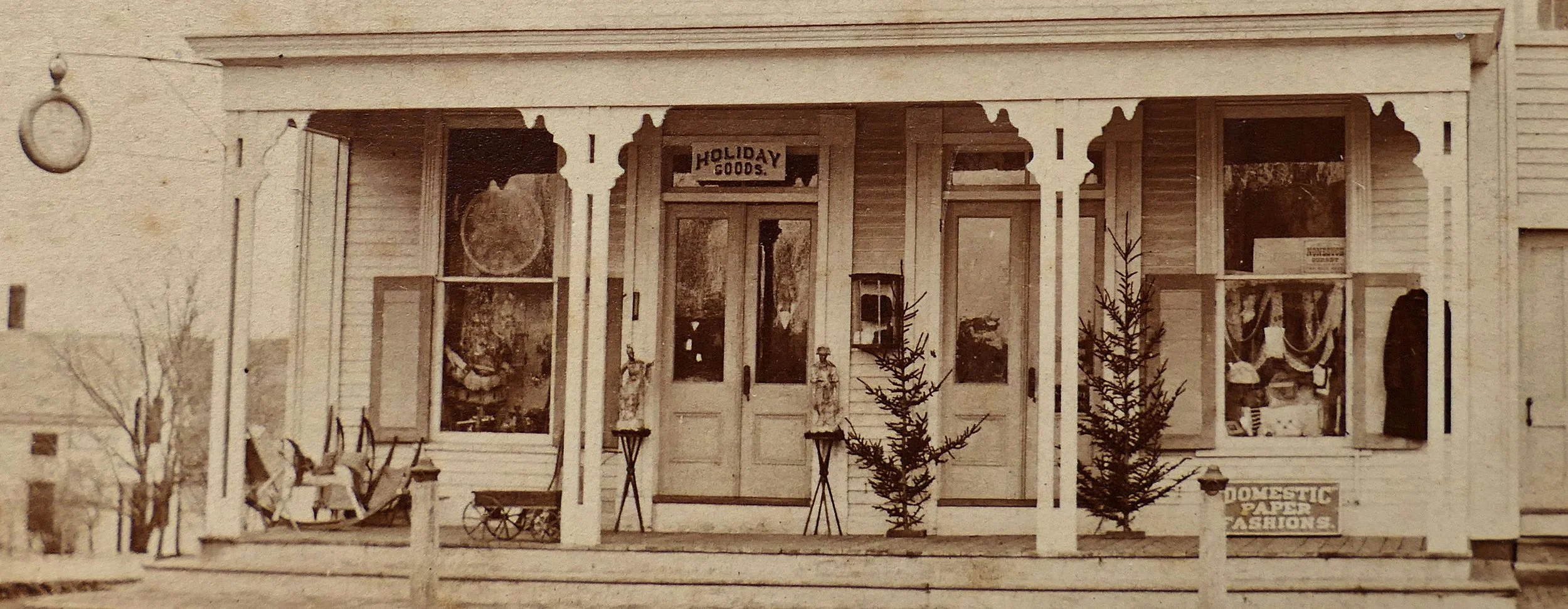
The photo of the white gable-end building with a front porch dated circa 1875 doesn’t show too much detail until it is enlarged. Then we can see that Daniel Cummings was full of Christmas spirit!
Flanking the right-hand front door were two feathery natural Christmas trees not decorated in any way. Over the left-hand door hangs a sign announcing, “Holiday Goods.” On the left side of the porch are piled wagons, rocking horses, and sleds.
D. Cummings’ profession as a jeweler, goldsmith and clockmaker can be gleaned from the large clock at the peak of the roof with his name. Another clock hangs out over the street from the left side of the porch.
Further evidence of Daniel Cummings’ Christmas spirit (or business savvy) can be seen in this advertisement dated Barre, Dec. 12, 1862, which appeared in the “Barre Gazette.”
“𝑯𝙐𝑹𝙍𝑨𝙃 𝙁𝑶𝙍 𝘾𝑯𝙍𝑰𝙎𝑻𝙈𝑨𝙎 & 𝙉𝑬𝙒 𝙔𝑬𝘼𝑹’𝑺!
OLD SANTA CLAUS
Is still alive; notwithstanding the shell and small shot have scattered all around him in the field of active service for the last twelve months, he still lives and has been through town and left at the old stand of D. Cummings an endless variety of
TOYS AND FANCY ARTICLES,
For the good little folks, and did not forget the children of a larger growth; and the old man says, sell them as low as before to all who patronize his old customers. Don’t forget the place, at the OLD WATCH AND JEWELRY STORE. -- DANIEL CUMMINGS.
N.B.—I would also say, that I have a large assortment of the most perfect
CALENDAR CLOCKS
Ever offered to the public. Every business man should have one: they keep the month, the day of the month, the day of the week and the time of day, make all their own changes, and are always correct, without any repairs to the calendar. The clock like any other good clock, will want oiling once in two or three years. Also, a good assortment of common 30-hour and
EIGHT DAY CLOCKS,
Which will be sold very low for cash, or exchanged for corn or oats at a fair price.
D. Cummings, Barre, Dec. 12, 1862”
Daniel’s ad lets us know from the very beginning that the country is involved in the American Civil War, one year in, but that Santa can get through gun and artillery fire and leave items at his store for parents to purchase for their children.
Another interesting detail is that he will accept oats or corn rather than cash in payment. This practice reflects the old New England tradition of paying for items with goods rather than cash. But why corn and oats? It is possible that Daniel Cummings was supplying the Union Army with these two desperately needed commodities: corn to feed the men, and oats to feed the 200,000 horses that ate 2.5 million bushels of oats a month.
Daniel Cummings sounds like a good merchant, one who may have laid in a store of children’s toys that would not ordinarily be found in a jewelry store. Not much mention is made of jewelry, but he would love to sell you a clock or two.
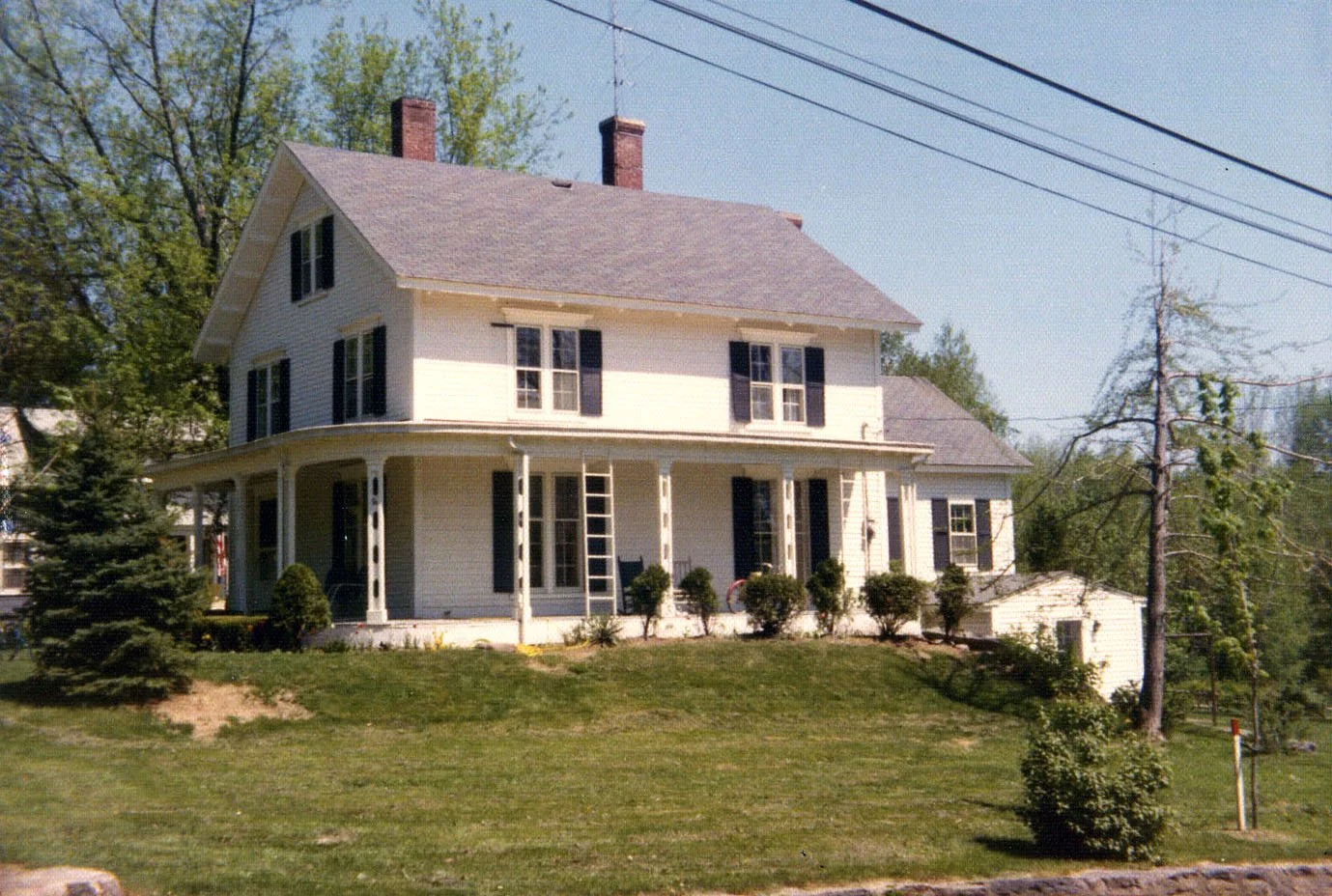
Born in Auburn, Massachusetts in 1816, Daniel was a son of John Cummings, who moved to Barre. Daniel married Martha Abby Brooks, daughter of Austin Brooks of Petersham, in 1843. He purchased land from Willard Broad on what we call Broad Street, on the north side of Winter Street, in 1851. The 1855 Map of Barre shows a house at that location owned by D. Cummings. It was, and still is, a lovely, gracious home just off Barre Common, which allowed Daniel Cummings to walk just one block to work each day. Many of us who grew up in Barre in the 1950s will recognize it as the “Cranston house.”
Daniel Cummings died in November 1875 of consumption (tuberculosis). The “Barre Gazette” (Nov. 19, 1875), noted that he was a well-known and highly respected citizen, who held the position of deputy sheriff for several years. It went on to say, “Few men have done more for the prosperity of the village during his long residence here, and few citizens would be more sadly missed from the daily walks of business and social life than Mr. Cummings. A man of unquestioned integrity, of strict sobriety and good business ability, ever ready to do a neighborly kindness, he won a large place in the esteem and confidence of his townsmen, and the entire community regard his comparatively early departure as a public loss.”
Another tenant of the same business block since about 1851 was dentist A. A. Howland. He certainly would have been surprised to know that a century and more later, his office was still used for dentistry. Dr. Howland’s advertisements emphasize the manufacture of whole sets or partial sets of teeth, all of which would prove satisfactory for mastication of food. Probably no preventive dental services were available 175 years ago, and making replacement teeth was the next best thing.
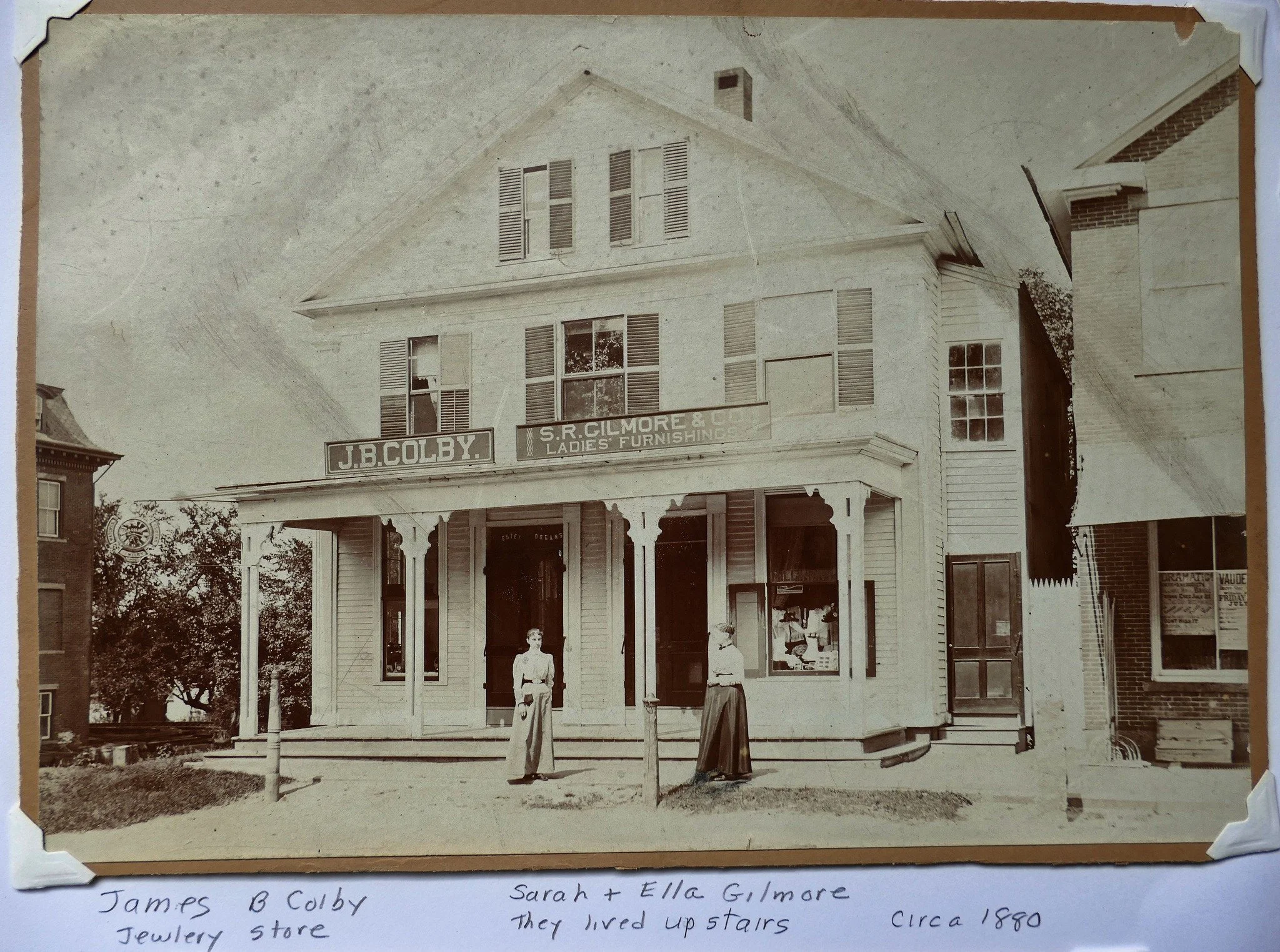
James Buchanon Colby replaced Daniel Cummings as the jeweler in that building. He did not advertise handling clocks. Misses Sarah and Ella Gilmore lived in the upstairs quarters. Miss S. R. Gilmore provided ladies’ furnishings downstairs. The photograph of the building with the J. B. Colby sign is dated circa 1880 to 1900.
James Buchanon Colby was, like his predecessor Daniel Cummings, involved in community affairs, until his death in 1917, but I have found no evidence that he shared Cummings’ love of Santa Claus.
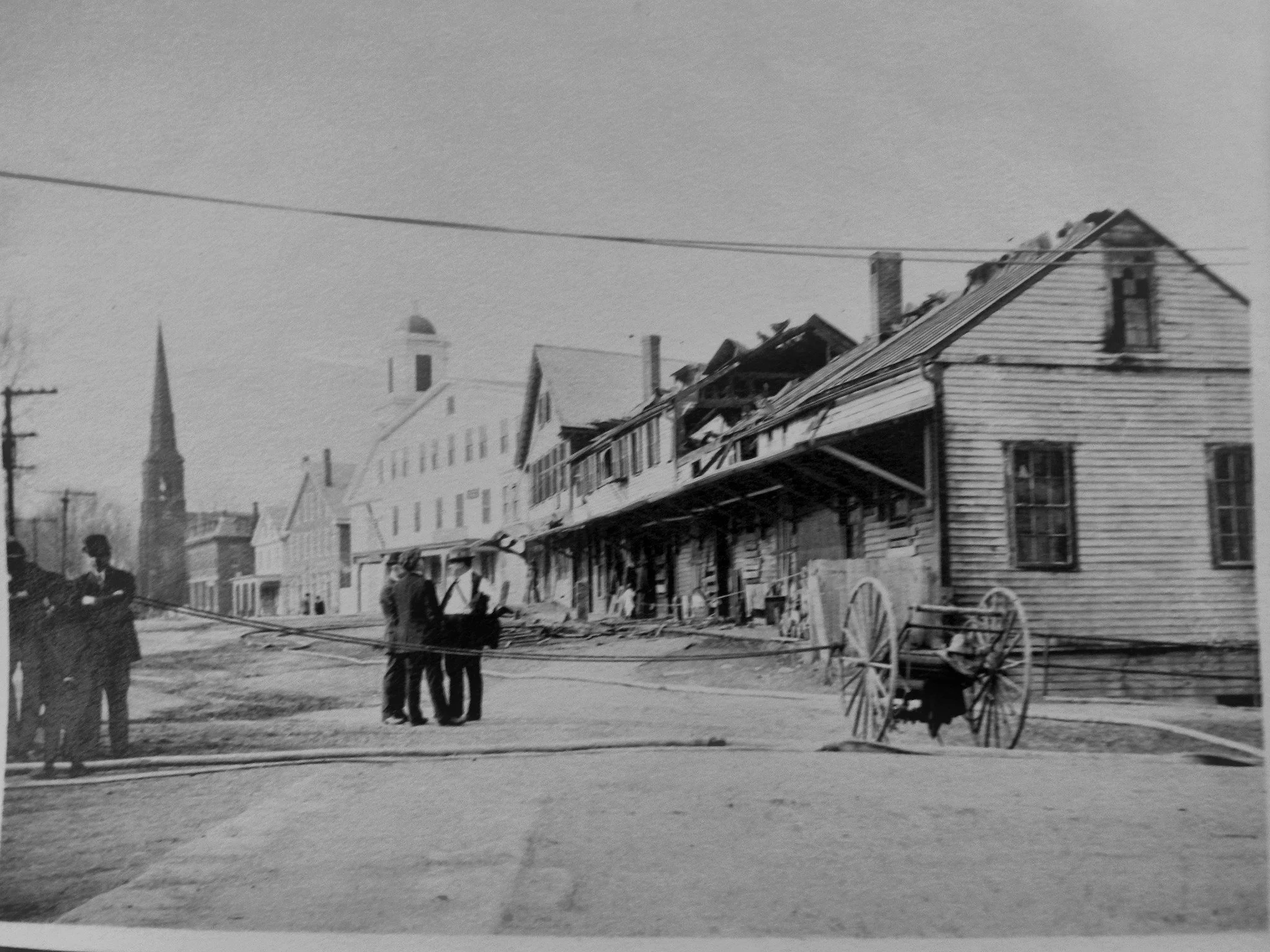
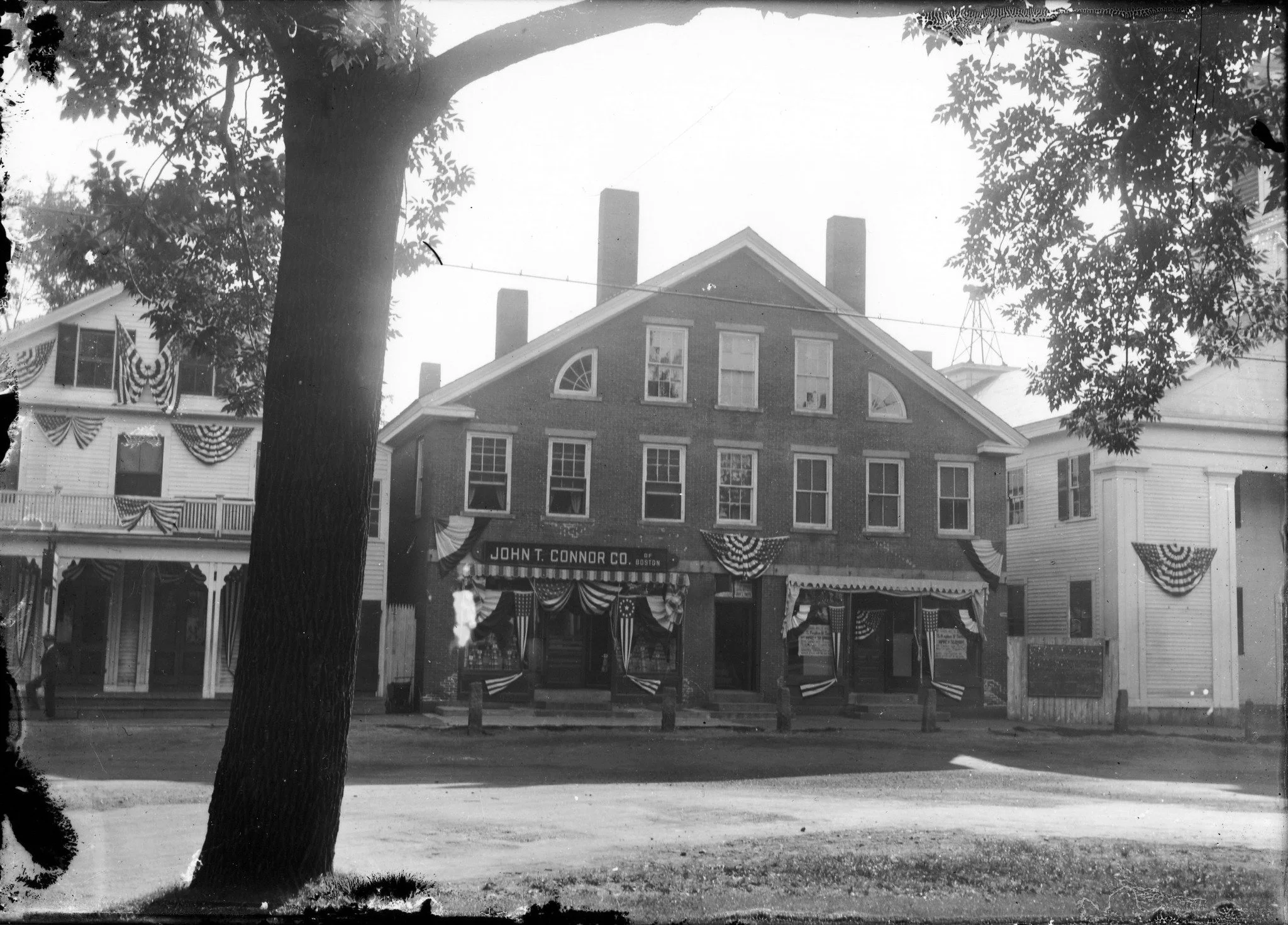
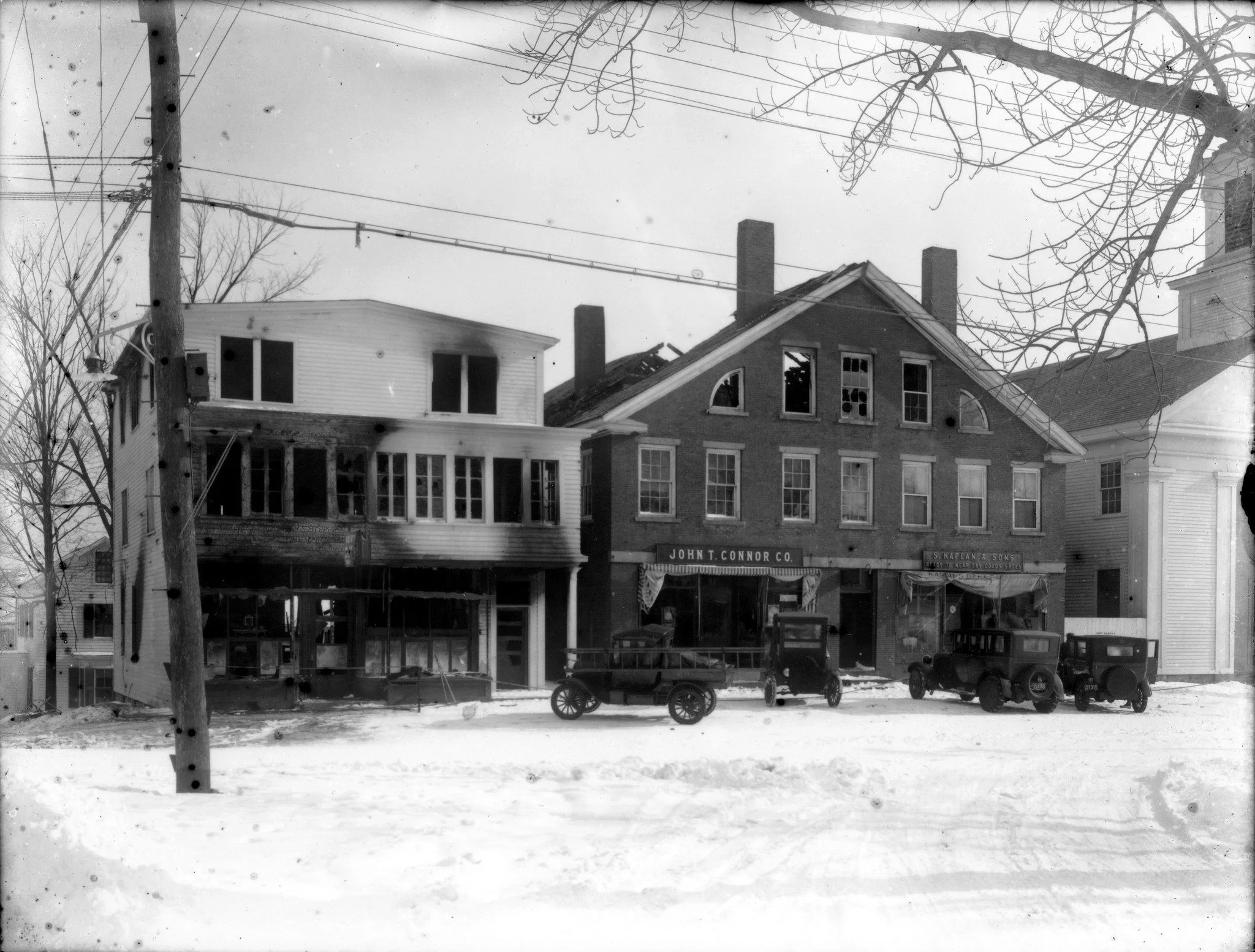
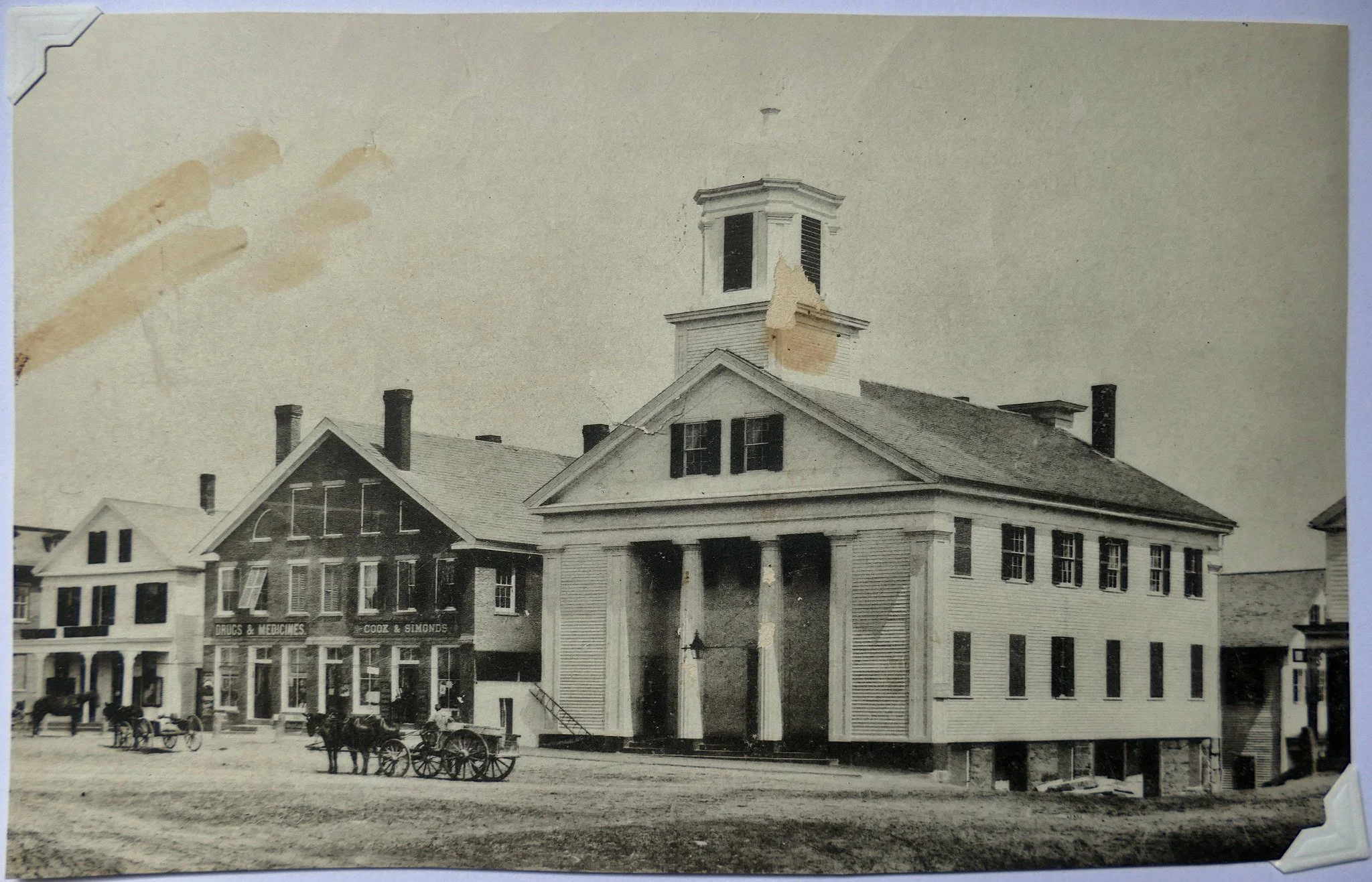
A photograph taken of Exchange Street in 1920, when a fire severely damaged the block next to Summer Street, shows the building on the corner of School Street looking much as it did in 1875. A photograph of the devastating fire in 1927 that badly damaged the old Cummings Store and the brick block, but which spared Town Hall, shows that the Cummings store building had been significantly altered since 1920. The roofline had been altered and the front porch enclosed. The building was saved and repaired so that even today, it looks much as it did 100 years ago, in its altered state. The brick block was very heavily damaged and although saved, it was altered beyond recognition from its original state.
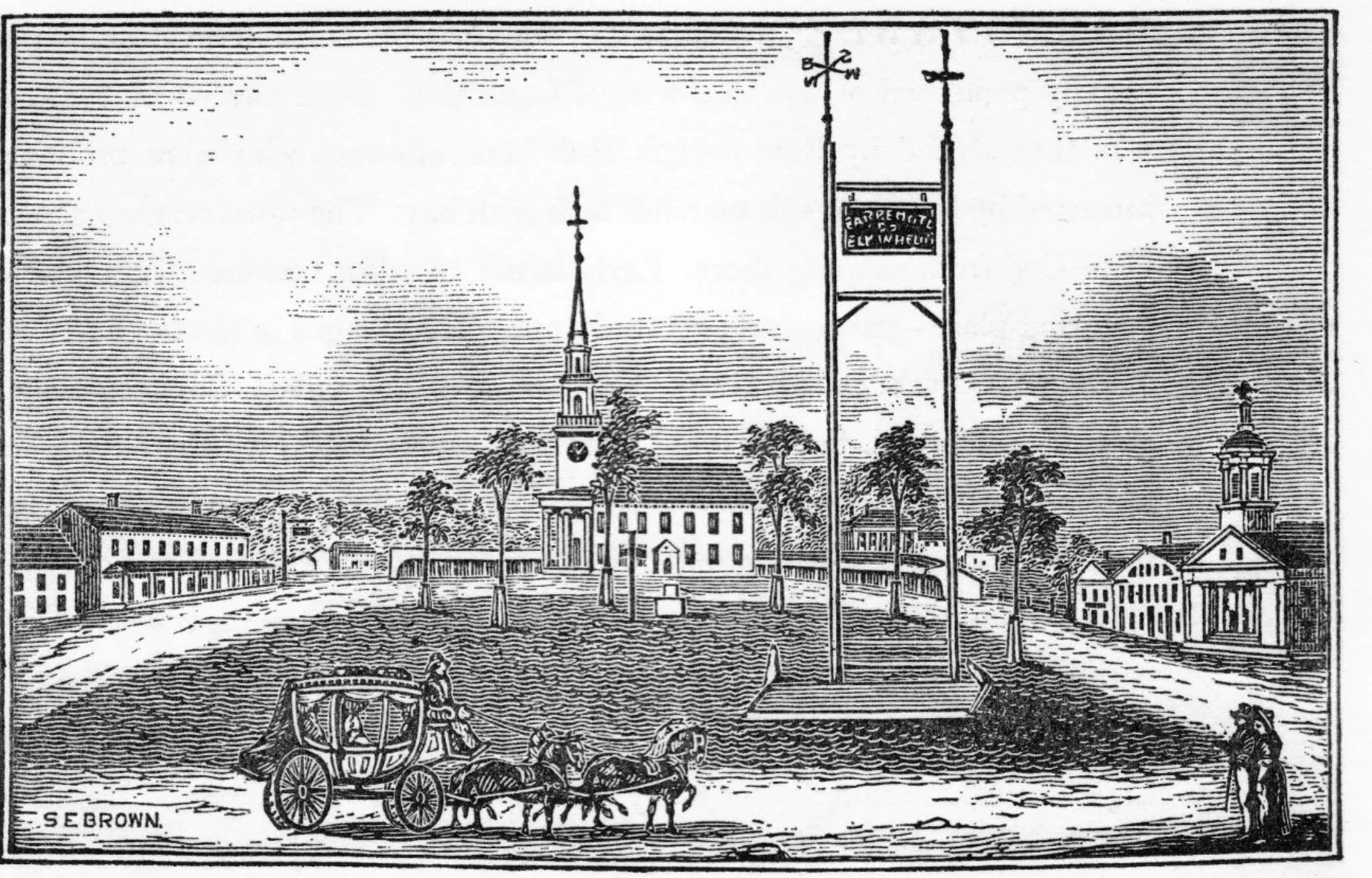
Viewing photographs of Exchange Street as it appears from about 1840 (the first known representation through a woodcut print), the building that would become Cummings Store has no porch and a center entrance, indicating it was remodeled before the c. 1875 photograph.
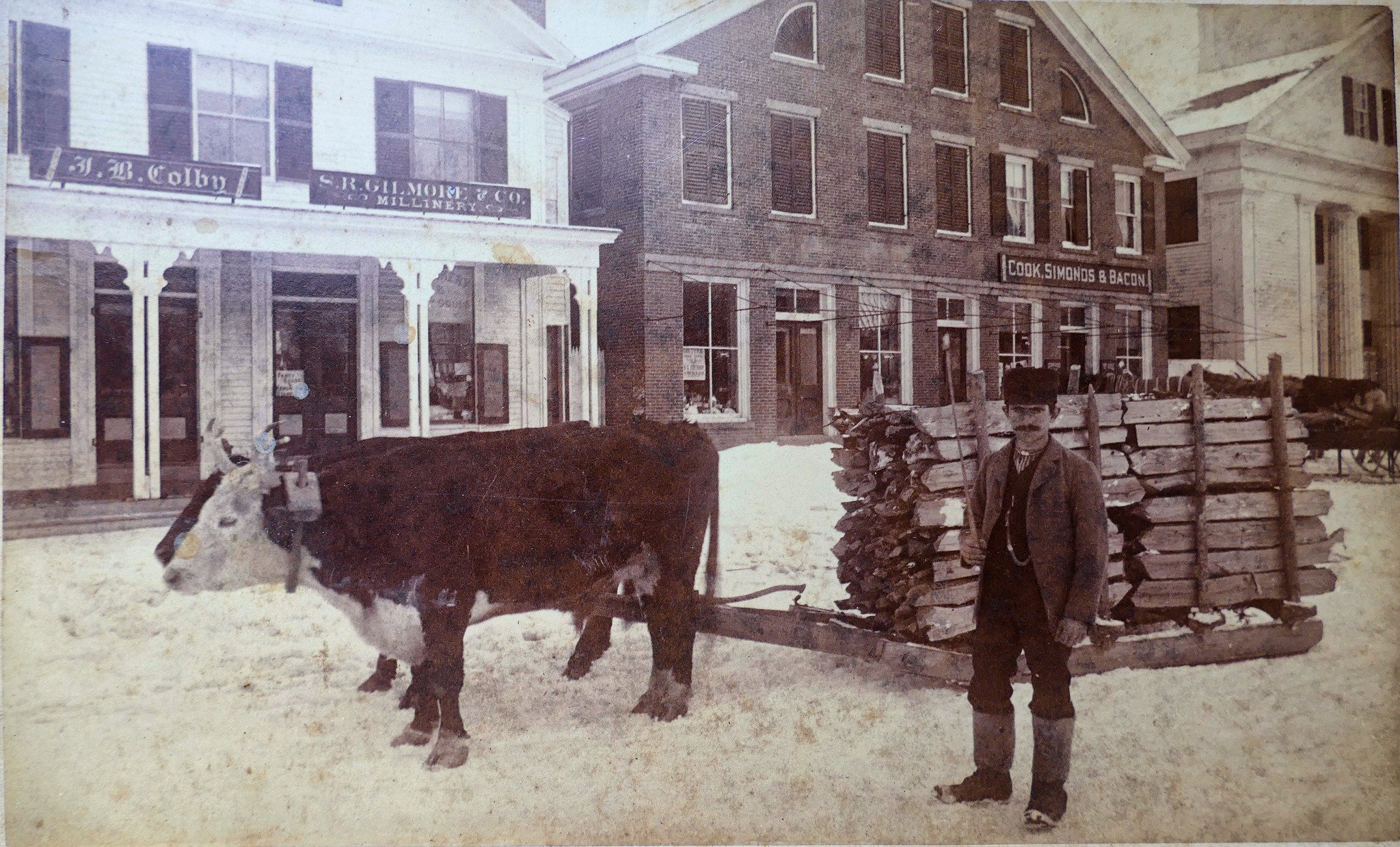
Depictions of Exchange Street since 1840 show some interesting modes of transportation. In 1840, the only vehicle is the stagecoach. The circa 1900 photograph in front of the building when it was occupied by J. B. Colby shows an ox-drawn sleigh loaded with wood. Exchange street was much broader than it is now, almost park-like.
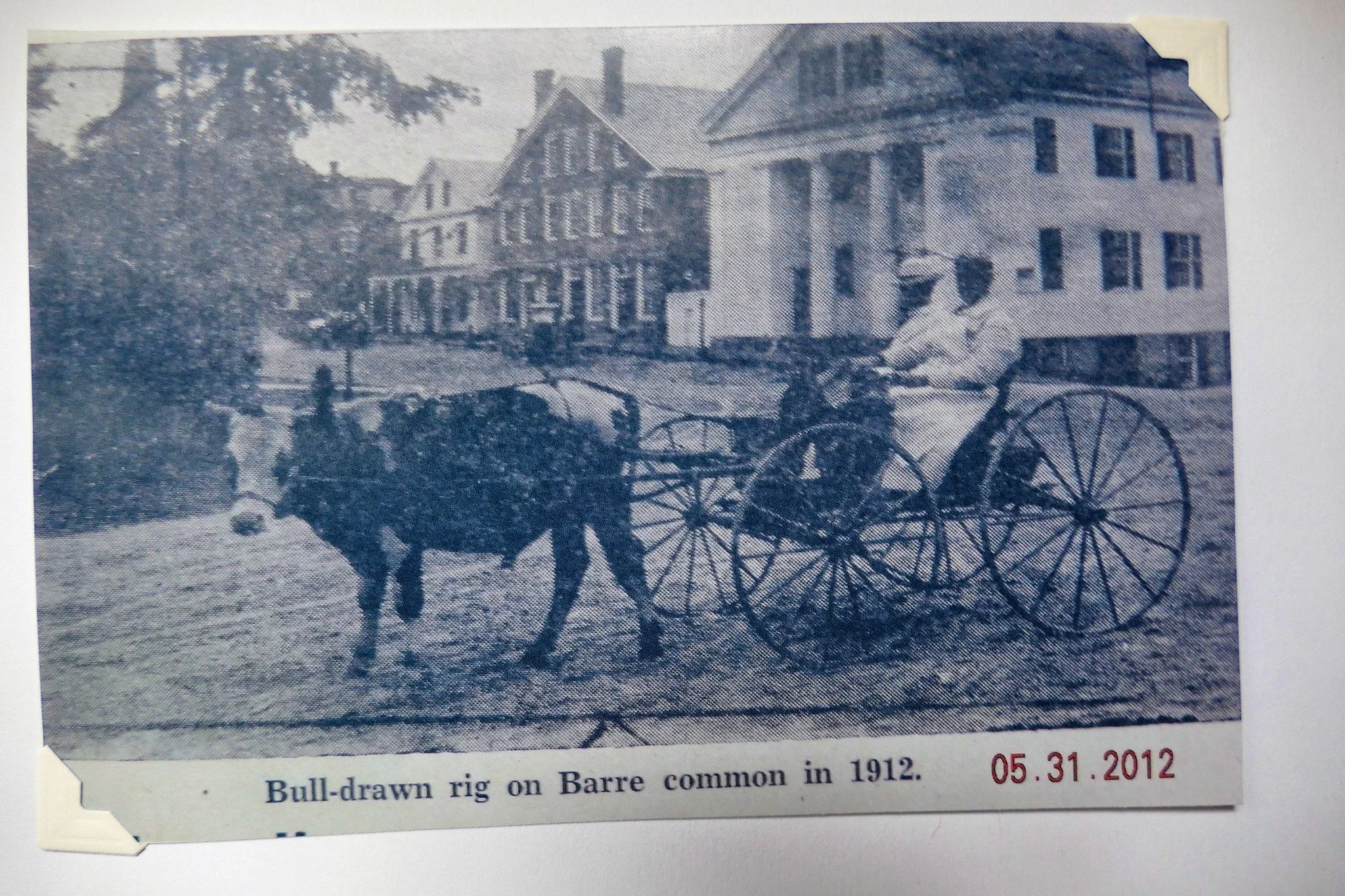
An interesting image from 1912 shows a “rig” carrying two passengers drawn by a bull.
Oh for the “good old days.”
Lucy Allen
Dec. 14, 2025